

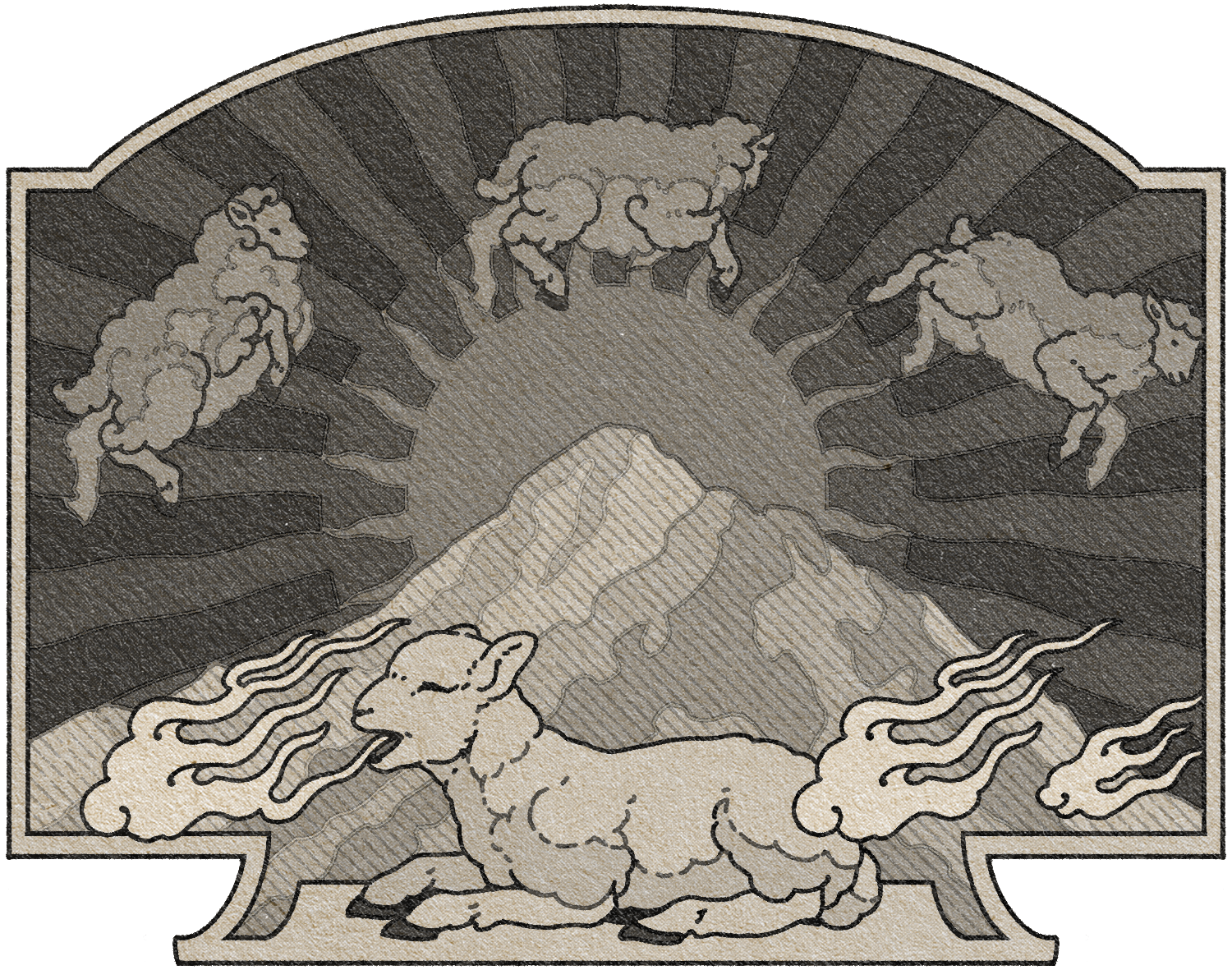
Spring came late that year. The ewes were still heavy with milk when the letter arrived, its edges worn from hard travel.
Dearest sister, it read. The fires here are unstoppable. Hatred for our kind has choked the air until we cannot breathe. You said your husband’s people would not receive us, would not share land or riches earned by their ancestors. But the only path left goes West, and so we come to you, hoping you will show mercy to honest souls.
Saba’s heart raced, knowing she must plead again with her husband to let them stay. Their home had room to welcome guests, and she had long hoped for it to be filled with the sweet noise of family: her little nieces and nephews, and the gentle companionship of Omar’s wife, whose face she could barely remember.
But her husband replied as he always did: “They won’t make it past the border.”
“Omar is clever! He’ll find a way.”
“Then they’ll bring suspicion to us—and put you at risk. Why invite trouble to our quiet lives?”
Her husband was an imposing man, respected by the villagers despite his Eastern bride. Could he not protect them, these people fleeing for their lives? Instead, whenever an Easterner crept into his domain, bone-weary from the horrors they’d escaped, he sent for the police. Now officers patrolled the border all along the mountain pass.
Chastened, Saba did not reply to Omar. Across the valley, the Easterners continued to burn homes and slaughter their own.
Instead of her brother came the sheep. An assortment of old and young, with coats finer than she’d ever touched, and ewes wearing beautiful, glossy horns that rivalled those of their most handsome rams. They watched with helpless eyes as she walked among them, bleated and struck the earth with tired hooves. Skittish but proud, they refused to mingle with the native flock. Saba led them along her favourite path, to a shaded hollow where the grass was greenest, and watched them bend their heads to the earth.
When the beasts filled out—though not yet fat—they ate one of the lambs in celebration, eager to learn its taste and texture. Less than four months old, it mewled and struggled when her husband carried it to slaughter, and its spooked companions made a racket into the night. “They don’t trust us yet,” he grumbled. Then, amazed: “Heavens, this flavour!”
The cooked flesh parted like warm butter between their teeth. For one precious moment Saba was transported back to girlhood, and the smoky hearth of her ancestral home—the scent was rich, and strong, and salty like soil drenched with blood. And yet each mouthful was tender and sweet, filled with a youngling’s promise. Saba and her husband guessed that the flock had fled the valley, driven West by fires onto their mountain. Its shepherd was likely among the dead, shot or starved on the journey. How fortunate, they thought, that sheep could cross a border between countries that people could not.
That night, Saba dreamt she walked toward a great gathering of clouds, trapped beneath smoke along the foggy mountainside. The familiar surroundings of her home had taken on the strange look of an unknown country, and as the moonlight shifted she understood what she’d failed to see: these were no clouds, but rows and rows of people crouched along the scarp, huddled like vagrants in the bitter cold. They stared at her, men and women and children alike, grief carved deep in their tired eyes. Omar raised his head and called to her, weeping: “Sister, I trusted you to keep us safe!”
She looked at their bleak faces, uncomprehending. Then, with mounting dread, she examined Omar’s children, those small trembling shapes who bleated in misery, nudging at their parents’ coats. Two girls, two boys—for years, she’d longed to meet them and hear them call for their Aunt Saba. She tried to make out their woolly, soot-streaked faces in the gloom. She could not remember their names. And yet she knew there was one missing . . .
In the morning, she looked at her husband and saw her own terror mirrored in his sleepless face. It was as if she’d carried a fearsome truth across the threshold of her dreams, and in the clear light Saba recognized the hunter’s stride in her husband’s aging legs, the flash of hungry yellow in his eyes. For a moment she wondered if, in his stern and righteous manner, he might deny any wrongdoing. But when it came, his impassivity deserted him at last.
One by one, their teeth lengthened into sharp and deadly fangs. Their jaws deepened and stretched, bones cracking and reshaping under a terrible pressure; their spines curved as if to cradle a painful hunger. As they whined against the cold stone floor, still half man and not yet beast, the sweetness in their mouths curdled into blood and rot. Their fingers curled into claws, black as thorns, from their clenching paws.
When it was over, they turned and saw in the other the truth of what they had become. They loped fearfully into the open air. The flock scattered and fled into the valley below.
Saba and her husband remained on the mountain for what seemed a long time, hunting what they once tended, driven by a restless hunger they could not name. The following year, villagers came looking for the landowner and his wife, hoping to shear wool from the Eastern beasts. When they returned, they brought their guns. They would take care of the wolves.
• • •